
GEOCELL
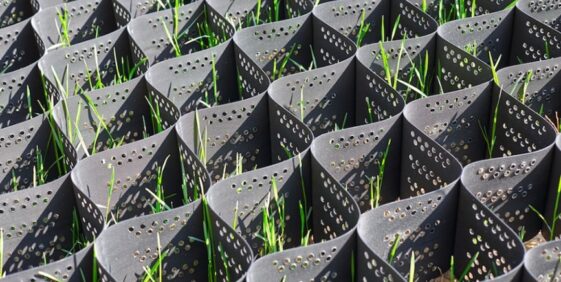
Geocell
A geocell is a 3D cellular structure formed by connecting strips of polymeric material to create a grid of interconnected cells. When expanded and filled with soil, sand, or aggregate, it confines the infill material and improves its load-bearing capacity
Geocell is a three-dimensional, honeycomb-like structure made from high-density polyethylene (HDPE), polypropylene, or similar polymers. It is used in geotechnical engineering for soil stabilization, erosion control, and load support.
Function and structure
- Structure: Geocells are typically made of a series of interconnected cells, forming a flexible, three-dimensional network.
- Materials: They are most commonly made from high-density polyethylene (HDPE), but other geosynthetic materials are also used.
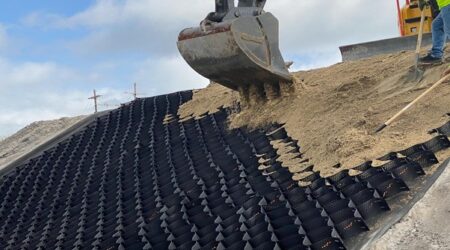
- Infill: After being placed on the ground, the cells are filled with various materials like soil, sand, or gravel, which are then compacted.
- Confinement: The cells confine the infill material, preventing it from moving laterally and increasing the overall shear strength of the soil.

APPLICATIONS
- Road and railway embankments
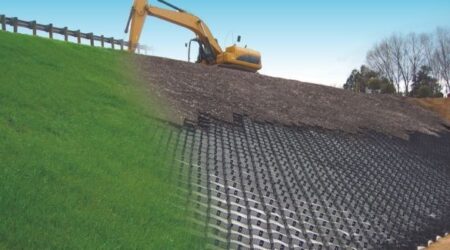
- Slope and retaining wall stabilization
- Load support for parking lots and access roads
- Erosion control on embankments or riverbanks
- Foundation support for pipelines or tanks
Advantages
- Lightweight and easy to transport
- Quick installation
- Durable and resistant to chemicals and UV rays
- Reduces use of imported fill material
- Improves soil strength and stability